The CTO’s Guide to Selecting an AI Services Partner in 2026
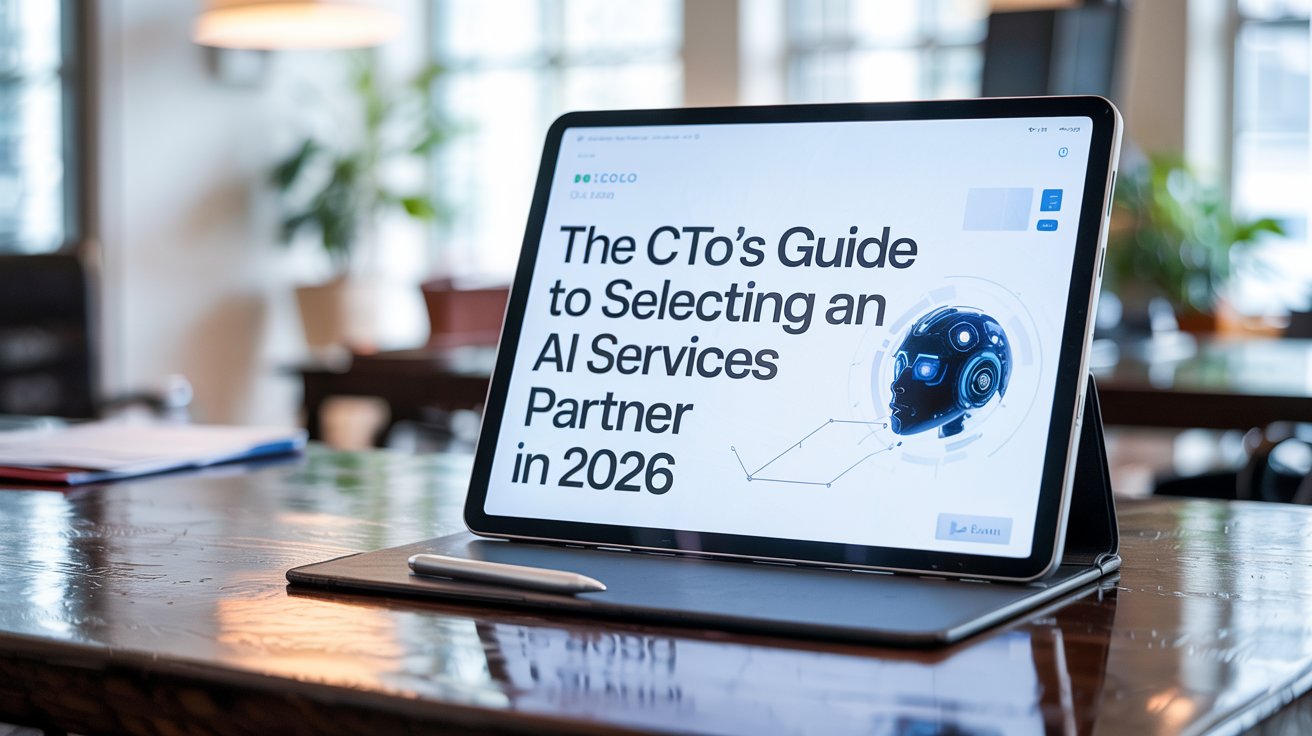
The CTO's Guide to Selecting an AI Services Partner in 2026
Let's be honest. The AI vendor landscape in 2026 is exhausting.
Every agency is an "AI company" now. The firm that was building WordPress sites two years ago has a new deck, a new homepage, and a LinkedIn bio that says "AI-first." And here's the uncomfortable part: at the proposal stage, they look almost exactly like vendors who actually know what they're doing.
So how do you tell the difference before you've handed over six months and a serious chunk of budget?
That's what this guide is about.
Why Most AI Partner Selection Processes Fail?
Here's something most vendor selection guides skip over.
The real risk isn't picking a vendor who's obviously bad. It's picking one who's impressive in the room but completely unprepared for the reality of your environment. They build something that works in a demo and then step back the moment the project is "delivered."
Post-deployment is where most AI initiatives fall apart. Not during the build. Months later, when the model starts drifting, data changes, or your business requirements shift and nobody's around to adapt the system.
That's the gap this AI services partner selection CTO guide is designed to close.
8 Questions That Separate Real AI Partners from Vendors Who Just Pitch Well
1. Explain How Your Model Reaches a Decision
Don't ask if they can. Just ask them to do it. Right there, in the conversation.
If they explain it clearly, that's a good sign. If they get defensive, lean on jargon, or tell you it's "proprietary," walk carefully. Black-box AI can look brilliant in a demo. But when it makes a bad call in production, and your operations lead wants answers, "the model decided" won't hold up.
Model transparency isn't a nice-to-have. In regulated industries, it's a compliance issue.
2. Where Does Our Data Actually Go?
Not "our servers are secure." Specifically, which country, which infrastructure, who internally can access it, and whether it's ever used to improve their models for other clients.
A vendor who has genuinely thought about data governance will have documentation ready. No follow-ups needed. If your question about data governance creates a pause and a "let me check on that," you've already learned something important about how seriously they take it.
3. Show Me Your SLA. The Actual Document.
Pull it up during the call. Not tomorrow, not after you sign now.
Here's why this matters. Sales conversations are full of reassurances that sound reasonable in the moment. "We've got you covered." "Our support team is always on." Great. What does the contract say? Because an AI services SLA that actually protects you spells out uptime numbers, what severity levels look like, how fast someone picks up the phone for a critical issue, and what the vendor owes you if they miss those targets.
A lot of SLA documents say almost none of that. And you won't know until you read one.
4. Have You Actually Worked With Our Stack Before?
This sounds basic. It trips people up constantly.
Before any vendor recommends a solution, they should be asking what you're running. Your CRM, your data warehouse, your internal tools, all of it. If you're 10 minutes into a pitch and nobody's asked yet, that's worth noting. It usually means they have a product they're selling, regardless of your setup.
Real integration capability comes from having done it before in messy, real-world environments. Not from saying it's possible. So ask them to name a specific integration they've built that's similar to yours. If they go vague, that's your answer.
5. What Happens to Our System Six Months After Go-Live?
Picture this: your AI system is live. Three months later, outputs start getting inconsistent because the underlying data distribution shifted. Who handles that?
This is the question that reveals more than any other. Ask specifically about model monitoring, retraining cycles, and who owns that ongoing process. If the answer is fuzzy or they redirect to "we can scope that separately," you're looking at a vendor whose responsibility ends at launch day. That becomes your problem the moment they exit.
6. Is Your MLOps Support In-House or Outsourced?
MLOps maturity is what separates an AI system that holds up 12 months later from one that quietly degrades in the background. Ask whether they have dedicated pipelines for model updates, how performance is monitored on an ongoing basis, and whether ML engineers are assigned to your project specifically or shared across many others.
No real MLOps means no real post-deployment support. It really is that straightforward.
7. Give Me One Real ROI Number From a Past Client
Not a range. Not "significant efficiency improvements." One number, one client, one industry similar to yours.
AI ROI validation is genuinely hard, and that's exactly why so many vendors stay vague about it. But if they've done real work that produced real results, they should be able to point to something specific. A testimonial that says "we loved working with them" tells you nothing. Push for metrics or move on.
8. Who Is Actually Running Our Project After Kickoff?
This one trips up a lot of CTOs. You've been talking to senior people throughout the sales process. So ask directly: are those the same people working on your engagement once you sign? Or does it hand off?
Find out how many active projects the team assigned to yours is managing. Understand who you call when something breaks on a Friday evening. Get a clear answer before signing, not after.
A Vendor Scorecard Template to Compare Options Fairly
Score each vendor right after the call while it's fresh:
| Criteria | Weight | Vendor A | Vendor B |
|---|---|---|---|
| Model transparency | 15% | /10 | /10 |
| Data governance | 20% | /10 | /10 |
| SLA specificity | 15% | /10 | /10 |
| Integration experience | 15% | /10 | /10 |
| Post-deployment support | 20% | /10 | /10 |
| MLOps maturity | 10% | /10 | /10 |
| Proven ROI track record | 5% | /10 | /10 |
Tally up the weighted scores. Anything under 6.5 is a risk worth reconsidering, regardless of how polished their presentation was.
AI Vendor Red Flags Worth Taking Seriously
Some of these get explained away too quickly in the excitement of a good demo:
Black-box AI with no explanation layer. You can't audit what you can't understand. And in any regulated environment, that's not a technical problem — it's a legal one.
ROI promises with nothing backing them up. Confident language is not the same as evidence. Ask for the data or don't take the claim seriously.
No MLOps support after go-live. A vendor who isn't discussing post-deployment monitoring isn't planning for it. That gap lands on your team once the engagement closes.
Any one of these should give you pause. All three together? Easy decision. A real AI services partner won't make you go digging for any of this — they'll surface it themselves before you have to ask.
What a Good AI Services Partner Looks Like in Practice?
The vendors worth your time come into early conversations asking questions, not leading with a pitch.
They want to understand your data infrastructure, your internal team's actual capacity, your compliance environment, and what success looks like for your business specifically, before recommending any technology.
That's the approach we at IntelliSource Technologies bring to every AI engagement. The starting point is always what you actually need, not what already exists in a product catalog. The goal is to build AI capabilities your team can genuinely own, maintain, and grow, not something that demos well and breaks quietly six months later.
Done second-guessing vendor pitches? Use the scorecard above, run all eight questions on your next call, and hold every vendor to the same standard. To see how IntelliSource Technologies approaches AI partner selection from the very first conversation, reach out to the team here.
Also Read our Article on: Agentic AI Development: Why Smart Firms Move Beyond Chatbots
 Previous blog