
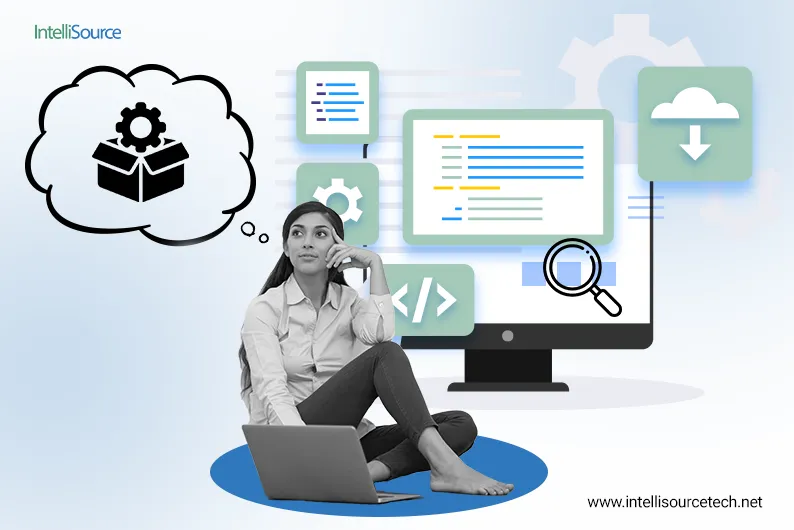
In the dynamic digital world, the selection of the software can literally make or break a business. Ranging from customers data management to optimizing operations, software has a central role in efficiency and growth driving. Off the shelf software is the first out-of-the-box solution for the majority of businesses; pre-built applications created to serve the broad audience of general needs. However, as companies change, their needs also change, leading many to look at custom software development. Therefore, does off-the-shelf software have to be the best option? Or maybe you should think about a custom designed solution that will suit your special business requirements? Let’s go deep into defining the pros and cons of each and see how a Custom Software Development Company can provide you with a better alternative.
What Is Off-the-Shelf Software?
Off the shelf software is normally ready to use as soon as it is installed or subscribed to. It is a cost effective, user friendly, and often has full customer support. The main attraction is convenience and fast deployment – perfect for startups or small businesses eager to turn up and run.
Common Limitations of Off-the-Shelf Software
Although off-the-shelf software might seem like the safest and fastest choice for most companies, it is certainly not perfect in all cases. These readymade solutions are made for the populous, not for the specifics of individual organizations. Consequently, businesses are usually faced with numerous limitations that can prevent long term growth, efficiency and innovation. Some of the most common challenges with off-the-shelf software are listed below: Must Read: Why Outsourcing Software Development is a Key Advantage for Businesses
1. Lack of Customization
The lack of flexibility is one of the most obvious weaknesses of off the shelf software. These products are developed to serve general needs of numerous users in various industries, and this often results in a “one-size-fits-all” policy. Companies which have a unique workflow, industry specific process or niche market requirements may realize that they have to tailor their operations to suit the software rather than the software to suit them. For example, a logistics company that has a specific routing strategy, or a hospital with a proprietary method of intake of patients, would not find the required flexibility in a standard solution. Such misalignment may cause process inefficiencies, workarounds, and decreased employee productivity.
2. Hidden Costs
Off-the-shelf software seems to be the budget-friendly option at first sight. However, this can be misleading. As soon as you begin scaling usage, or adding crucial features, costs can skyrocket. Additional user licenses, premium features, third-party plug-ins and necessary integrations can make what appears to be an affordable option into a major recurring expense.
3. Integration Challenges
The vast majority of business use a wide array of tools and platforms in different departments. There is a big problem with using ordinary software on today’s systems. During integration projects, developers tend to work with third-party connectors, middleware and APIs and it can be complicated setting them up or keeping them maintained.
4. Scalability Issues
Off-the-shelf software is usually designed for small to medium-size businesses. When a company grows—in terms of users, data, regions and product lines—it may come to the realization that the software does not have the capacity to scale. Performance can be compromised in high usage or when dealing with large sets of data causing system slowdowns, crashes, or delays.
5. Security Risks
Since off-the-shelf software is used by so many, hackers believe it’s worth targeting for profit. Anything found to be weak in the software can be used to the advantage of thousands (or even millions) of businesses simultaneously. Organizations that depend on such solutions have little control over security configuration or patch schedules.
Why Choose Custom Software Development?
This is where custom software development wins. Custom software, as opposed to pre-made solutions, is created to meet the unique requirements and objectives of your company. • Tailored to Your Needs: A Custom Software Development Company will study your business model and workflows before creating an ideal solution. • Full Control and Flexibility: You are in the driver’s seat regarding updates, functionality, and the user interface. • Scalable and Future-Proof: Add new modules, users, or functionalities without changing the whole software infrastructure. • Enhanced Integration: Tailored to perfectly fit in with your current systems, databases, and third-party applications. • Higher Security Standards: Robust, industry-specific security measures are built-in, making them less likely to be hacked.
When Custom Development Makes Sense
Choosing custom development is not always necessary, but it makes perfect sense in the following cases:
· Complex Business Requirements
Off the shelf software may not be enough if your operations have complex workflows, custom rules, or multiple interdependent departments.
· Competitive Advantage
Customized software enables you to create distinctive features that would differentiate you from competitors.
· Regulatory Compliance
Industries such as healthcare, finance, and education have stringent compliance requirements. Custom software is better at achieving these specific regulatory standards.
· Long-Term Investment
If you observe your business growing enormously, a custom solution today can save you money and trouble later on.
· Customer Experience
If user experience is critical, custom software provides a personalized look and feel that increases satisfaction and loyalty.
Factors to Take into Account Before Choosing
Factor Off-the-Shelf Custom Development Budget Lower initial cost, recurring fees Higher upfront, lower long-term Time to Market Immediate / Days Weeks to Months Ownership Licensed from vendor You own the IP and code
Maintenance Handled by vendor Handled by you or your partner Scalability Limited by vendor tiers Practically unlimited
Real-World Examples and Use Cases
• Retail: While small shops use Shopify, giants like Nike and Zara invest in custom platforms for personalization and massive inventory handling. • Healthcare: Hospitals often build custom patient management systems to match specific clinical workflows and strict compliance. • Logistics: Giants like FedEx and Amazon use proprietary logistics systems rather than basic routing tools to manage their massive supply chains. • FinTech: Startups building new banking experiences require custom financial dashboards for unique security and UI requirements.
Off-the-shelf software provides a convenient and inexpensive point of entry for many businesses with standardized needs. However, for businesses that want to grow in the long term and have an edge over their competitors, custom software development is usually a better option. A trusted Custom Software Development Company can assist you in transferring your business needs into a strong digital tool designed specifically for your success.
Blogs:
Explore all blog
How to Build Scalable Applications That Don't Break Under Pressure?
By the time you need to scale, you're already in the incident. Why scalable application development for enterprises is an architecture decision — monolith vs. microservices, API-first design, cloud-native, CI/CD, observability, and load testing — not a feature you bolt on later.
Cloud Migration Gone Wrong: 7 Costly Mistakes and How to Avoid Them
38% of enterprise cloud migrations blow past their budget. Discover the 7 most common cloud migration mistakes, why they happen, and how to avoid them before a single workload moves.
Digital Transformation Checklist for Businesses: 10 Signs Your Company Is Falling Behind
Most companies falling behind digitally don't know it yet. Use this digital transformation checklist for businesses to score yourself across 10 real signs — each with a measurable business cost attached.