The Silent Drain: Why Your Outdated Healthcare Software is Costing You Millions
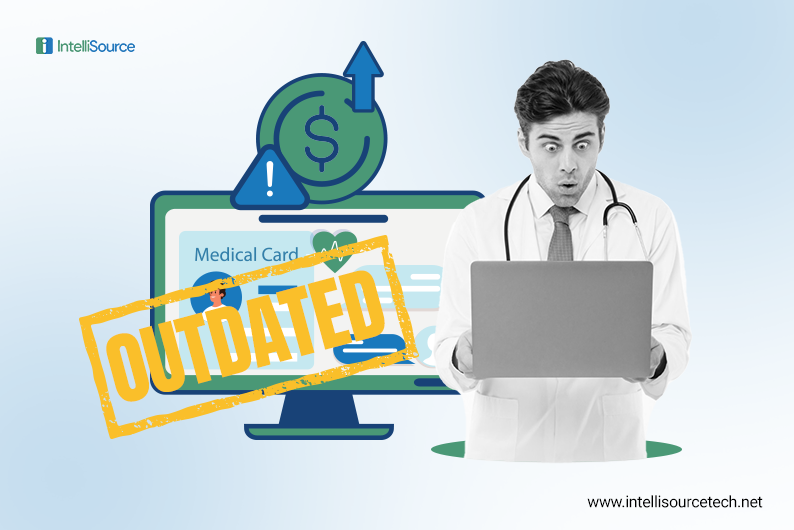
In the current healthcare world where everything is digital-first, the use of old healthcare software is not merely a technical inconvenience but a financial liability. What most medical organizations do not realize is that legacy systems are like a silent money guzzler and they affect productivity and in the long run it costs millions of dollars every year. Although software upgrades might appear as a formidable investment, the long-term costs of the healthcare software of upgrading outdated systems is much higher than that of modernization. Under the powerful impetus of digitalization and regulatory changes, the cost of adherence to the outdated technologies grows even more hazardous. The decision of a healthcare provider to partner with acustom healthcare software development company could be the most strategic decision in the contemporary world.
Introduction: The hidden costs of outdated healthcare software.
Legacy systems might seem to be working at a glance. They do simple jobs and offer common work processes. But, behind this exterior is an intricate network of inefficiencies, concealed support costs, manual workarounds, and compliance risk. The cost of healthcare software is more evident in terms of time that the staff spends in overcoming technical difficulties, the need to use the paper-based records because of the poor system capabilities, and failure to produce valid analytics.
Additionally, legacy systems may be harder to maintain and usually need special technicians, who have knowledge on older programming languages and frameworks, which adds more cost to maintenance. The number of these professionals available is low and highly priced. Instead of saving money, old healthcare software engages organizations in a vicious cycle of band-aids and long-term waste. Devoid of the investment in contemporary, scalable systems utilizing custom healthcare software development, financial and operational resources continue to be bled dry.
Lack of Integration: How old software hampers system integration and increases costs.
The contemporary health industry requires the unity of different departments, services, and third-party platforms. Sadly, old healthcare software is rarely capable of interoperability that is required to integrate different elements of an IT infrastructure of a facility. Consequently, there is functional departmentalization where departments run in silos, important information is lost or delayed and data duplication is the norm.
Automated CI/CD pipelines guarantee that all changes in the codebase will be checked by a set of processes such as build, test, and deployment. These actions are choreographed by the tools that implement the same standards and processes and this is essential to ensure quality in large-scale software delivery pipelines.
Testing and Quality Assurance: How DevOps and CI/CD improve software quality.
CI/CD pipelines are highly connected with testing, and this aspect promotes software quality. Unit tests, integration, and end-to-end tests are performed automatically whenever changes are made. This is an immediate feedback loop that makes sure that defects are identified early enough and solved in time creating a healthy and sound software product.
This division sharply lowers the efficiency of the healthcare system and causes poor decision-making. Clinicians and administrators are both compelled to cope with a number of interfaces which are not linked to each other, and this has caused administrative overload. The inability of software systems to communicate with each other increases the cost of the total healthcare software as a result of inefficiency and wastage of time. These bottlenecks can be eradicated with the help of integrated and modern systems, which is possible due to custom healthcare software development, and this will not only enhance the workflow but also the bottom line.
Security Risks: The vulnerabilities posed by outdated healthcare software.
Healthcare cybersecurity threats are at their peak. Vendors do not usually support the old healthcare software, which implies that it does not receive any essential security patches. Such unpatched systems are like low-hanging fruits to cybercriminals who are seeking sensitive patient data to access or to implement ransomware.
The reputational damage caused by the data breach is just one of the aspects of the data breach that have a hefty financial repercussion. Data recovery costs, legal obligations, and non-compliance can bring even big healthcare providers to their knees. Each day that the outdated healthcare software is used, it puts an organization at risk of these threats in more ways. A custom healthcare software development will help you invest in security measures to ensure that your systems are well-equipped with the latest security protocols to shelter data and monetary resources.
Regulatory Compliance: Outdated software might not meet new health regulations.
The healthcare regulations are changing continuously, and the requirements, such as HIPAA, GDPR, and local laws regarding the health data, are becoming even more strict. These are newer requirements that the institutions may not be able to meet using outdated healthcare software, which places them under the risk of non-compliance.
Violation of these regulations may lead to severe penalties and legal actions, which adds another cost to the healthcare software. It may also influence the accreditation status and restrict the possibility of a provider to obtain insurance reimbursements. Organizations can also develop or improve such systems by partnering with a custom healthcare software development provider and design new systems that are compliance-ready, and secure operations against compliance changes to regulatory practices.
Operational Inefficiencies: How legacy systems slow down operations and incur extra costs.
Poor system performance, obsolete interface, crashing, and manual data entry are only a few demonstrations of operational stress that are a result of outdated healthcare software. Such inefficiencies are experienced in terms of increased patient wait time, slow diagnosis, billing errors, and administrative overheads that are not necessary.
The deficiencies of the system are usually covered by the staff through workarounds that slow down the operations even more. Such delays and mistakes pile up, causing a visible drop in productivity and a considerable increase in the healthcare software cost in the long run. Inefficient operations lead to a reduced rate of patient throughput, an increase in revenue cycles, and employee dissatisfaction. The shift to modern tools through the development of custom healthcare software can transform such stagnant operations into an efficient process, which will allow using resources much more efficiently and reducing costs accordingly.
Patient Experience: The negative impact of outdated software on patient care.
The impact of old healthcare software on patient care is perhaps the most pernicious result of using it. Patients want fast, precise, and customised services. Nevertheless, the outdated systems do not give the providers access to the real-time information, share the records efficiently, or communicate with patients.
The result of this inability to operate like a modern entity is re-tests, wrong prescriptions, wrong scheduling, and late treatments. All these experiences eventually destroy patient trust and satisfaction. This can push patients to tech-savvy providers in the competitive healthcare markets. The real cost of healthcare software is more than the operating losses but the lost patients and the word-of-the-mouth. Using custom healthcare software development, the engagement platform with patients, mobile apps, and real-time information systems could be developed to improve care delivery and satisfaction.
Upgrading to Modern Solutions: Benefits of upgrading healthcare software for cost savings
The shift from old healthcare programs to new powerful technologies is not a cure, but it is an investment in the future. Scalable systems are faster, reliable and have been upgraded. They combine AI, machine learning, and data analytics in order to aid more effective decision-making. The use of cloud capabilities guarantees collaboration in real-time and remote access, which is important in the modern healthcare environment.
Another feature of upgraded systems is the decrease in breakdowns, the decrease in downtime and automation. This also leads to less administrative expenses, better flow of work and better patient outcomes. The healthcare software price is significantly lower in the long term by making the processes more efficient and patient retention. Modern solutions are based on the individual needs of an organization and are more effective and economical as compared to off-the-shelf products when tailored using custom healthcare software development.
The Time to Take Action
It is time to stop procrastinating modernization of software. The more each and every year an organization operates using outdatedhealthcare software, the more the organization incurs the hidden costs in terms of money, process losses and reputation. The threat of legacy systems has never been higher as cybersecurity threats, tighter regulations and higher patient expectations contribute to a melting pot.
It might not appear easy to upgrade the healthcare IT infrastructure, but it is essential to sustainability in the future. Custom healthcare software development firm can make the transition a lot simpler, making sure that the solutions are unique, HIPAA-compliant, and can be re-scaled as needed. It is not only about adopting technology, but it is about safeguarding your institution against the silent leakage that retrograde healthcare software has over the past been subjecting it to.
Conclusion: Why healthcare businesses must prioritize software upgrades.
When it comes to the industry where lives are involved, there is nothing more irresponsible than to use outdated healthcare software. Legacy systems are a big liability represented by the cumulative cost of their healthcare software inefficiency, security vulnerability, regulatory and poor patient care outcomes. Modern and integrated systems upgrade has ceased to be a luxury and become inarguably a must-do by custom healthcare software development. Healthcare providers can turn this leech around by taking action and retaking the lost money, improving patient care, and setting them up to succeed in a more digitally oriented world.
 Previous blog