The “Cloud Repatriation” Trend: Why Smart CTOs Are Auditing Their AWS Bill in March.
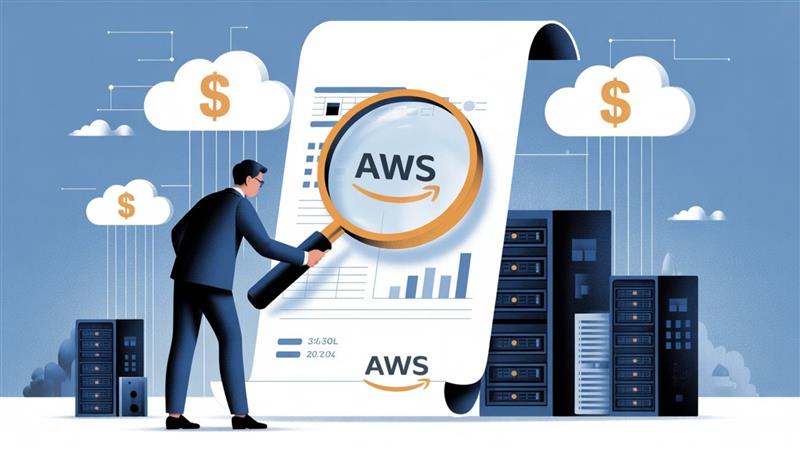
In March every year, smart CTOs pull an unlikely task onto their calendars: they audit their AWS invoices line by line. For many teams, this is the first step toward meaningful cloud cost optimization. It sounds boring, but in 2026, "cloud housekeeping" has become a strategic exercise in cutting waste. The root cause is predictable: rushed "lift and shift" migrations left a trail of underused instances, oversized databases, and orchestration cruft that quietly inflate monthly spend. If your leadership's complaint starts with "we moved to the cloud to save money, but our AWS bill keeps going up," this post explains what to look for and how a focused audit translates into durable savings.
Why Cloud Cost Optimization Matters Now?
Most migrations were sold as efficiency stories: less on-prem hardware, more elasticity. What happened instead was inertia. Teams kept VMs sized for peak traffic, scheduled backups that run 24/7, and purchased support tiers they no longer need. The result is predictable: a budget that balloons while visibility shrinks. For teams that expected a smaller OPS line, this is especially painful when finance starts asking for cutbacks.
Cloud Cost Optimization isn't about pinching pennies; it's about redesigning to fit cloud economics. That means asking three questions at scale: which resources are idle, which applications were merely lifted (not modernized), and which workloads belong on a hybrid stack or in a Cloud repatriation strategy. The answers power an AWS bill audit that produces savings and technical clarity.
What CFOs And CTOs Actually Want From Cloud Cost Optimization?
Finance wants predictability. Engineering wants performance and agility. The bridge between them is a practical cloud cost optimization program that surfaces actionable savings without degrading service. An effective program will deliver:
- A prioritized list of idle resources and unused reserved instances discovered during an AWS bill audit.
- Refactoring opportunities where long-running "lifted" apps can be rewritten or re-platformed, so serverless architecture ROI becomes measurable.
- Recommendations for a realistic cloud repatriation strategy that moves stable, latency-sensitive workloads to cheaper alternatives when it makes economic sense.
How A March AWS Bill Audit Uncovers Hidden Waste?
Doing an AWS bill audit in March has an operational logic: Q1 usage patterns are settled after holiday or seasonal spikes, and teams have time before budget cycles. A thorough audit combines billing analysis with telemetry: Cost Explorer exports, CloudWatch metrics, and tag-hygiene checks. The process identifies common culprits, unattached EBS volumes, underutilized RDS instances, idle load balancers, and overly permissive support tiers.
A good audit also looks at architecture assumptions. If a legacy app was simply "lifted" without re-architecting for ephemeral compute, the audit will flag it for refactor. That is where serverless architecture ROI often appears: migrating request-driven workloads to managed serverless services reduces cost and operational overhead.
Cloud Repatriation Strategy: When Moving Back Makes Sense?
Repatriation sounds like retreat, but it's a strategic move. Some stable, high-throughput workloads are cheaper when hosted in colocation or optimized on a hybrid setup. A cloud repatriation strategy becomes attractive when recurring cloud costs exceed the total cost of ownership that a dedicated environment can provide. The decision is multidimensional and should follow an AWS bill audit and performance benchmarking.
Too often, teams treat repatriation as binary. In practice, a pragmatic hybrid approach, keeping bursty, elastic workloads in the cloud while repatriating steady-state processes, captures both agility and cost savings. That balance is the essence of modern cloud cost optimization.
Refactor Vs. Repatriate: Choosing The Right Path
Refractoring
When an AWS bill audit identifies a problem, the next decision is whether to refactor or repatriate. Refactoring to serverless is often the fastest path to recurring savings for event-driven or API-based services. Here, serverless architecture ROI is measured not just in compute savings but in lower operational effort and reduced incident load.
Repatriation
Repatriation makes sense for monolithic batch systems, large, predictable databases, or legacy licensing models that the cloud doesn't commoditize. The best Cloud Cost Optimization plans combine both: refactor what yields high ROI quickly, repatriate where economics or compliance require it.
A Practical Checklist For Your AWS Bill Audit In March
- Run Cost Explorer and export line items for the last 12 months.
- Map costs to owners via tags and update any missing tag metadata.
- Identify unattached resources (EBS, ENIs) and unused reserved or savings plans.
- Benchmark RDS and compute utilization—spot underused families or sizes.
- Profile network egress and 3rd-party licensing costs that often escape engineering oversight.
- Flag lifted applications for a serverless feasibility study.
This checklist is the minimum viable audit. The work that follows: refactoring, rightsizing, or repatriating, delivers the savings.
Realistic Outcomes: What To Expect From Cloud Cost Optimization
From experience, a focused cloud cost optimization program coupled with an AWS bill audit typically reduces monthly cloud spend by 20–30% in the first 3-6 months. Savings come from removing idle resources, moving to reserved pricing where appropriate, and refactoring targeted services to serverless patterns where serverless architecture ROI is highest.
Be realistic: not every service should be rewritten overnight. Prioritize by spend impact and operational risk, deliver quick wins, and use those wins to fund more ambitious refactors or controlled repatriation moves.
How IntelliSource Technologies Helps In Cloud Cost Optimization?
At IntelliSource Technologies, we run cloud architecture audits that combine billing forensics with architecture reviews and performance profiling. We find idle resources, prioritize a roadmap (refactor, rightsizing, or repatriate), and build a phased plan to capture quick wins and durable savings. If your AWS bill feels like it's growing for no reason, our team can perform an AWS bill audit, propose a cloud repatriation strategy where needed, and demonstrate serverless architecture ROI with a pilot.
If you'd like, we can run a short pre-audit to show where your biggest leaks are and how much you could save. That pre-audit is a low-effort way to test cloud cost optimization hypotheses.Contact IntelliSource Technologies to schedule a cloud architecture audit and start reducing waste from your cloud bill.