
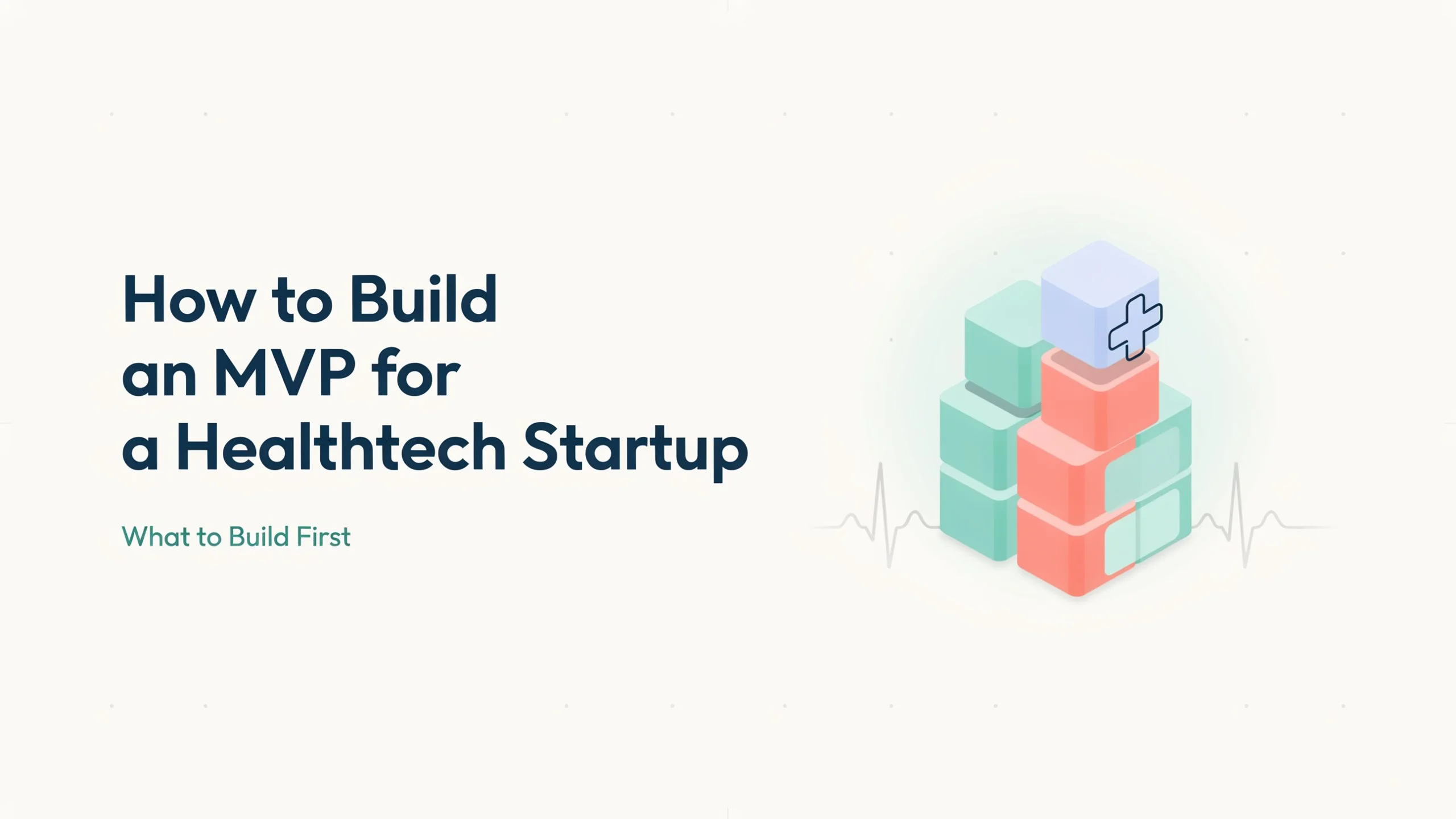
The most expensive healthtech MVP is the one that tried to launch with everything.
We see the same pattern often enough to call it. A founder with a real idea and real early interest builds ten features, spends the entire budget getting them all to a passable state, and launches to discover that users only ever needed two of them to work properly. The money's gone. The learning didn't happen.
An MVP isn't a cheap version of your product. It's the fastest way to find out whether you're right. In healthcare that's harder than usual, because you can't cut the parts that keep patient data safe. So the discipline has to come from somewhere else: from what you choose to leave out.
Must Read: How to Choose a Healthcare Software Development Company
Start from the one outcome, not the feature list
Before anything else, answer this: what's the single outcome this product has to deliver for it to be worth building at all?
Not ten outcomes. One. "A patient can book and attend a visit without calling the front desk." "A clinician can see a patient's history in under ten seconds." "A caregiver gets alerted when something changes."
That sentence is your MVP. Everything else is a candidate for later.
The reason this works is that it converts an argument about features into a test. Every proposed feature now has a question attached: does this make the one outcome happen, or is it something we'd like to have around it? Most things are the second one. That's fine — they just aren't version one.
What belongs in a healthtech MVP
Keep it to the spine of that outcome:
- The core action, done properly. The one thing your product exists to do. Not adequate. Good.
- The minimum around it to make that action usable. Sign-in, the one or two screens that get someone to the core action, and the way data gets in and out.
- The compliance layer. Non-negotiable. More on this below.
- A way to see what's happening. Basic visibility so you can tell whether people actually did the thing. An MVP you can't learn from isn't an MVP.
That's a real product. It's just narrow on purpose.
What can wait (even though it feels urgent)
Almost everything else:
- The admin panel. Early on you can often do it manually. Ten users don't need automation; they need you paying attention.
- The second platform. Web-only first is a legitimate choice. Adding iOS and Android is more to build and more to test, twice over.
- Integrations you don't need yet. Every EHR, lab, or payments connection is its own project with its own surprises. Add them when a user's blocked without them.
- Roles and permissions beyond the basics. Three user types can usually start as one, plus a manual step.
- Polish on paths nobody's walked yet. Perfecting a flow before anyone's used it is guessing with a design tool.
None of this is "never." It's "not until we know."
The one thing you can't cut: compliance
Founders sometimes ask whether the MVP can skip the HIPAA work and add it once there's traction. It's a reasonable-sounding question with an expensive answer.
Compliance isn't a feature sitting next to the others. It's a property of how the thing is built — how data is stored, who can reach it, what gets logged, which vendors touch it. Retrofitting that means going back through the foundation, which usually costs more than doing it right the first time and sometimes means a rebuild.
There's a simpler version of the argument too: an MVP that mishandles patient data isn't minimum viable. It's a liability with a login screen.
The good news is that "compliant" and "small" aren't in conflict. A narrow product has less surface area to secure. Fewer features means fewer places for data to leak. Scoping tight actually makes the compliance work more manageable, not less. If you want the plain-English version of what's involved, we wrote how to build a HIPAA-compliant app.
A realistic sense of cost and time
A focused healthtech MVP — one core outcome, one platform, compliance built in — generally lands in the range we broke down in what it costs to build a healthcare app, and takes something like eight to twelve weeks with a team that's done it before.
The variable isn't engineering speed. It's how disciplined the scope is. Two founders with identical budgets get wildly different products depending on whether they could say no to things.
How to know it worked
Not "we shipped on time." Not "it has all the features."
You know your MVP worked when you can answer a question you couldn't answer before. Did patients actually book? Did clinicians open it twice? Did the thing you were sure about turn out to be true?
Sometimes the answer is no, and that's the MVP doing its job — cheaply, before you built the other nine features on top of a wrong assumption.
The short version
Pick one outcome. Build the spine of it properly. Build compliance in from the first line. Leave out everything you can stand to leave out, and let real users tell you what comes next.
If you're staring at a healthtech idea and trying to work out what version one should actually be, send us a one-line description of what you're building. We'll give you an honest read on where we'd start. No pitch.
Must Read: How Much Does It Cost to Build a Healthcare App in 2026?
Blogs:
Explore all blog
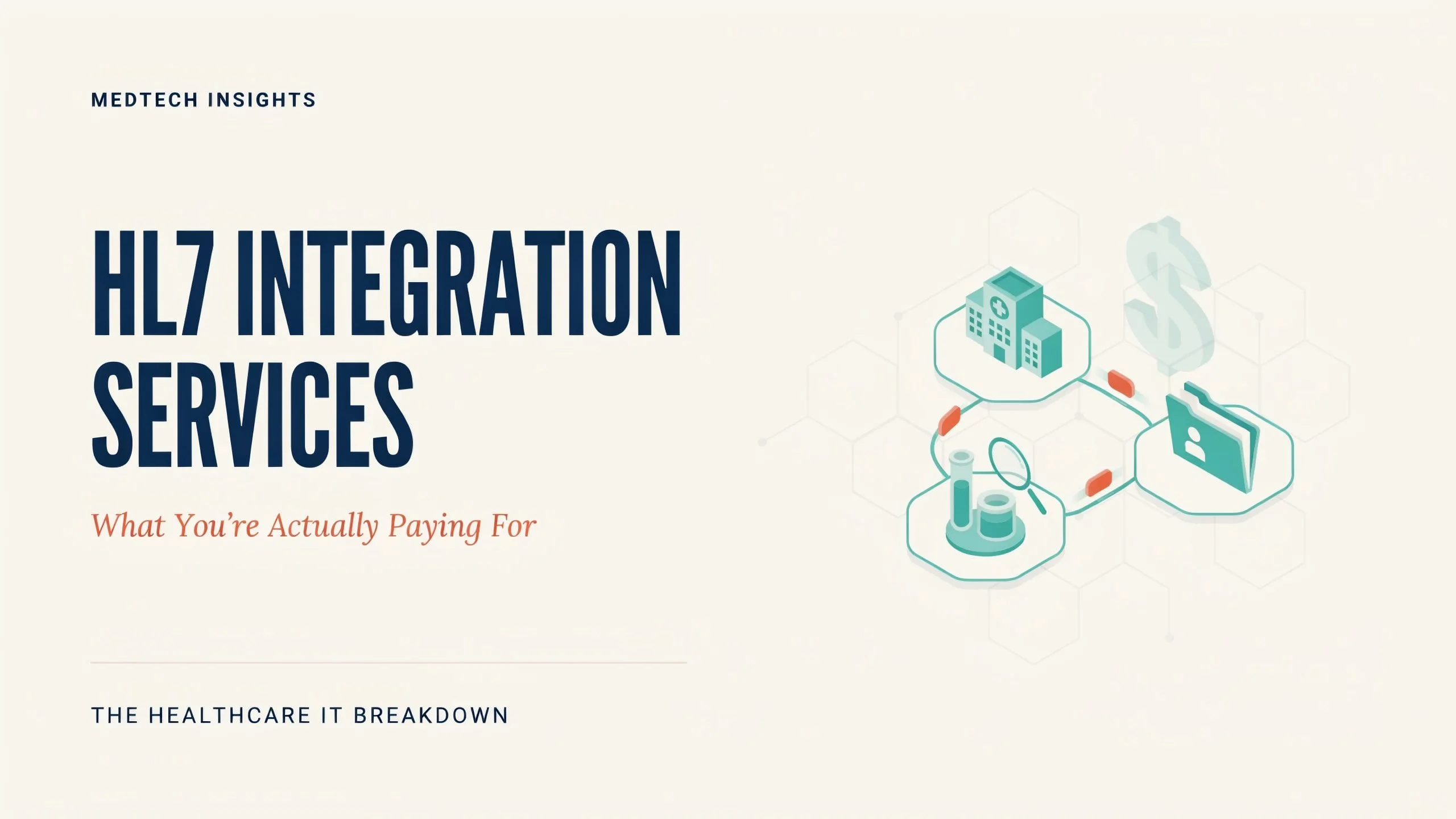
HL7 Integration Services: What You're Actually Paying For
A CTO told us his platform was FHIR-native, so HL7 wasn't his problem. Two weeks later the hospital sent over a spec for an ADT feed over MLLP. Here's what HL7 integration work actually involves, and what makes one interface cost three times another.
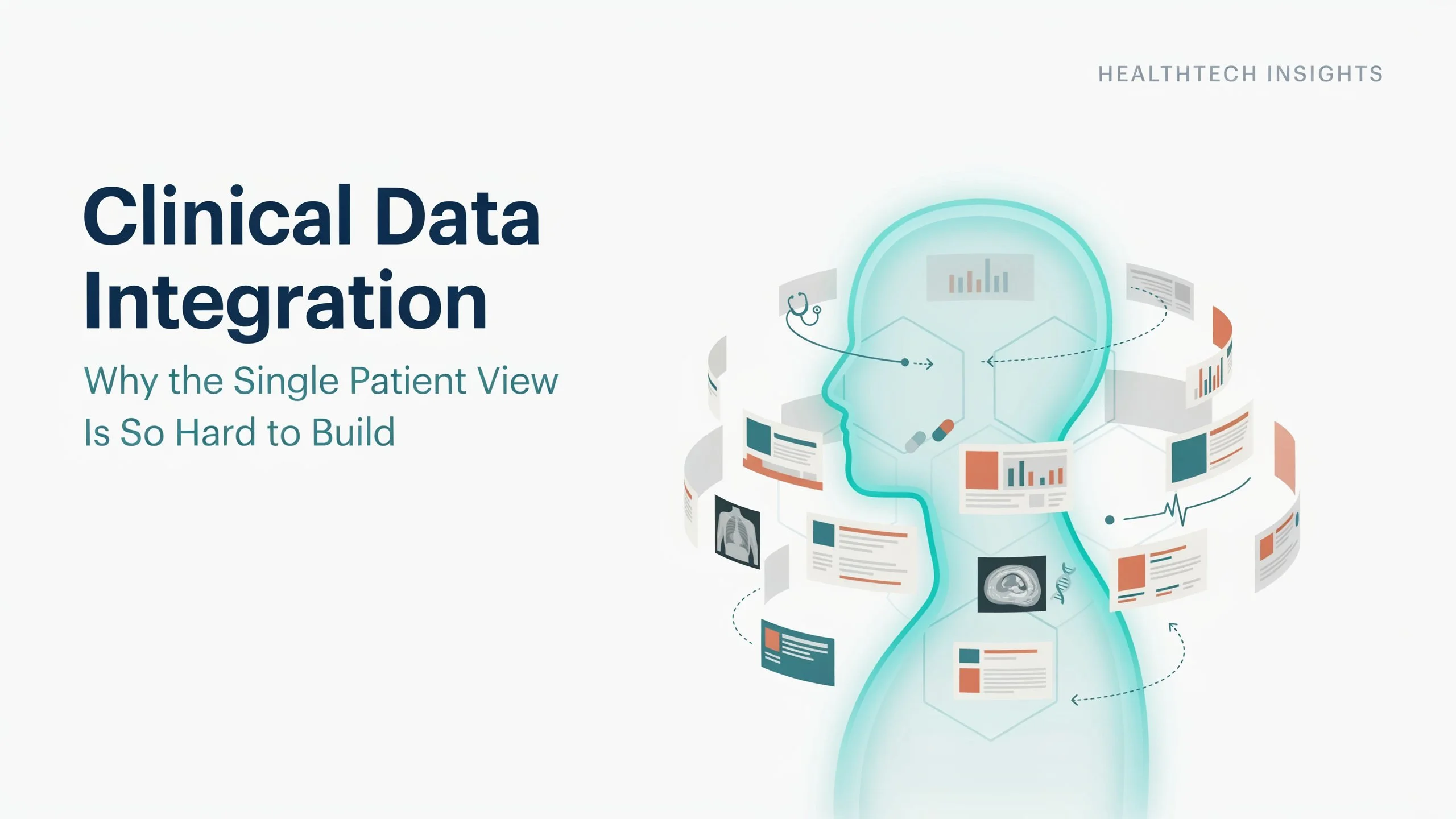
Clinical Data Integration: Why the Single Patient View Is So Hard to Build
A team demoed a beautiful unified patient dashboard. A nurse in the room asked one question: is this medication list current? Nobody could answer it. That question is the whole problem with clinical data integration.
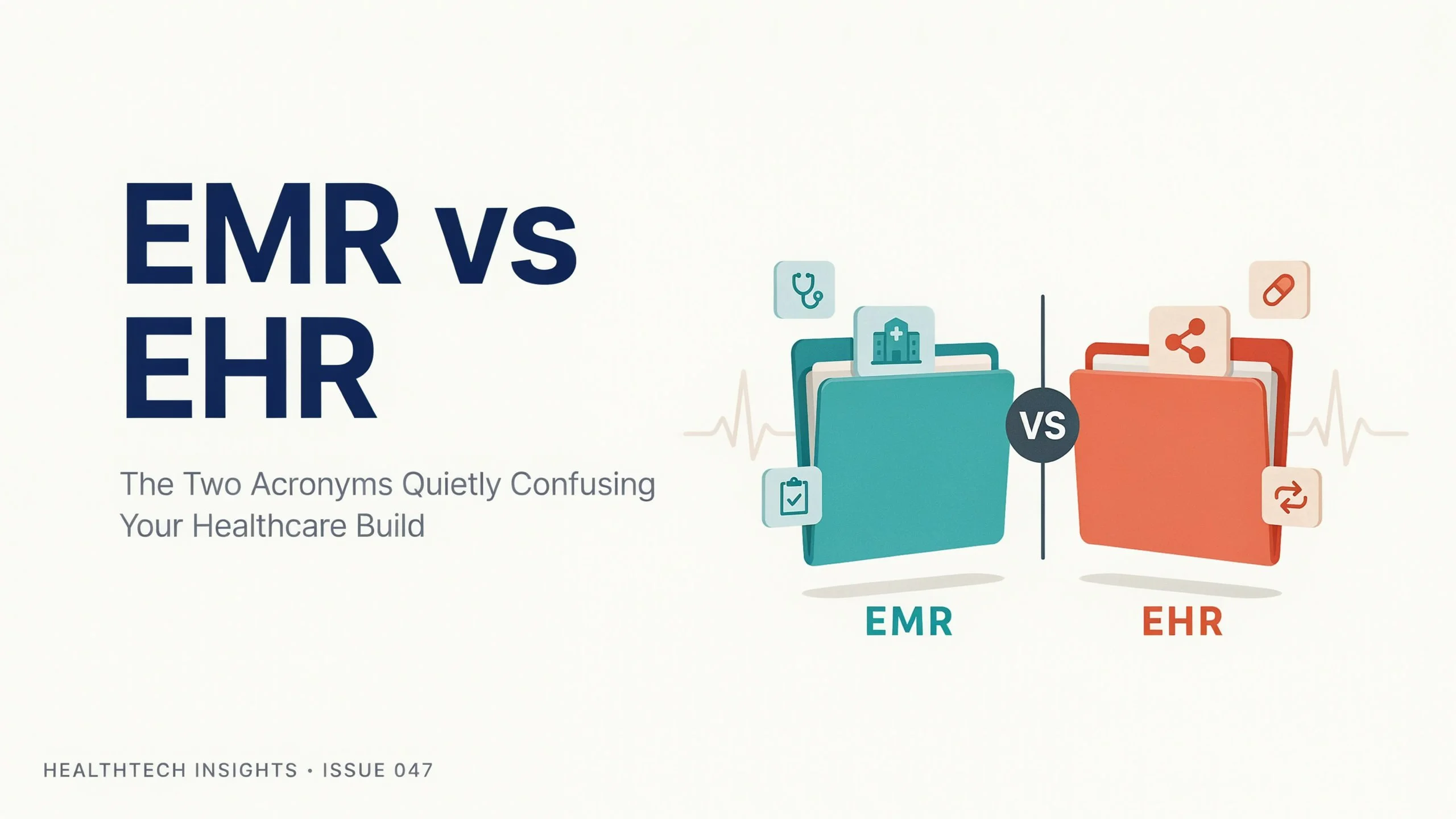
EMR vs EHR: The Two Acronyms Quietly Confusing Your Healthcare Build
A founder once lowered his voice on a call and asked, like he was confessing something: "What's actually the difference between an EMR and an EHR?" Six months into building a healthtech product. Here's the answer, and why it changes your build.