
Picking a healthcare software development company is one of the higher-stakes decisions a non-technical founder makes, and usually one of the least informed. You're choosing who builds the thing your whole company depends on, in an industry where a data mistake isn't a bug, it's a breach.
I'll be honest about the hard part up front. If you're not technical, you can't fully judge the work while it's being built. You're judging the people and the process instead. So this guide is about what to actually look at before you sign, written for founders, not engineers.
Must Read: How to Build a HIPAA-Compliant App
Healthcare software is a different animal
Most software advice doesn't transfer cleanly to healthcare. The reason is simple: in healthcare, the constraint isn't the feature list, it's trust and compliance.
A patient won't use an app they don't feel safe handing their information to. A hospital won't integrate with a system that can't prove its security. And US health data sits under HIPAA, which carries real penalties when it's handled badly. So a good build starts from the constraint and lets the features follow, not the other way around.
That changes who you should hire. A general app shop that's never touched protected health information will learn HIPAA on your dime, and on your risk. A company that's built in healthcare already knows where the landmines are.
What a healthcare software development company should actually do
The label gets used loosely, so here's what the real ones actually do:
- Scope before they code. They pin down your one core outcome before writing anything.
- Handle health data correctly from line one. Compliance is built into the architecture, not bolted on at the end.
- Put a senior on the architecture. The decisions made in week one are the ones you can't cheaply undo later.
- Document the build. So you're never held hostage if you decide to change partners.
If a company leads with a long list of technologies instead of asking what you're building and who it's for, that tells you something.
How to vet one before you commit
You can't read their code. You can read their answers. Ask these, and listen for how specific they get:
- "Have you handled protected health data before, and how?" Vague answers are a red flag. You want concrete examples: encryption, access control, signed agreements with vendors.
- "Who exactly will work on this, and how senior are they?" You want a named senior who owns delivery, not a salesperson who disappears after the contract.
- "How do you handle scope changes?" A real process, in writing, beats a friendly "sure, we'll figure it out." The friendly version is how budgets double.
- "What happens if we part ways?" Good answer: you own the code, it's documented, here's how handover works. Bad answer: a shrug.
- "Can I talk to a past client?" A company proud of its work will connect you. One that stalls is telling you something.
Red flags worth walking away over
A few patterns reliably end badly:
- A quote with no questions asked first. They're guessing.
- A price far below everyone else. Usually juniors with no senior oversight, which you pay for later in a rebuild.
- No mention of compliance until you bring it up. A sign healthcare isn't really their thing.
- A refusal to commit to fixed scope. Often a sign scope creep is their business model.
In-house, or a partner?
A lot of founders assume hiring their own engineers is the "serious" choice. Sometimes it is. Often it's the slower, costlier one, especially early. We wrote a separate, honest comparison of hiring an in-house team versus a healthcare software development partner if you're weighing it.
What it costs, roughly
Cost is the question everyone wants answered first, and nobody can answer in one number, because most of the price is decided by scope and compliance needs before any code exists. We broke down the real ranges and what drives them in how much it costs to build a healthcare app. And if HIPAA is part of your build, how to build a HIPAA-compliant app covers what that actually involves.
The short version
Hire for healthcare experience, a named senior who owns the work, a real scope process, and clean handover. Be suspicious of cheap quotes, capability lists, and anyone who skips the compliance conversation.
If you're at the point of choosing and want an honest read on your specific build, send us a quick description of what you're working on. No pitch, just a straight answer on how we'd approach it.
Must Read: How Much Does It Cost to Build a Healthcare App in 2026?
Blogs:
Explore all blog
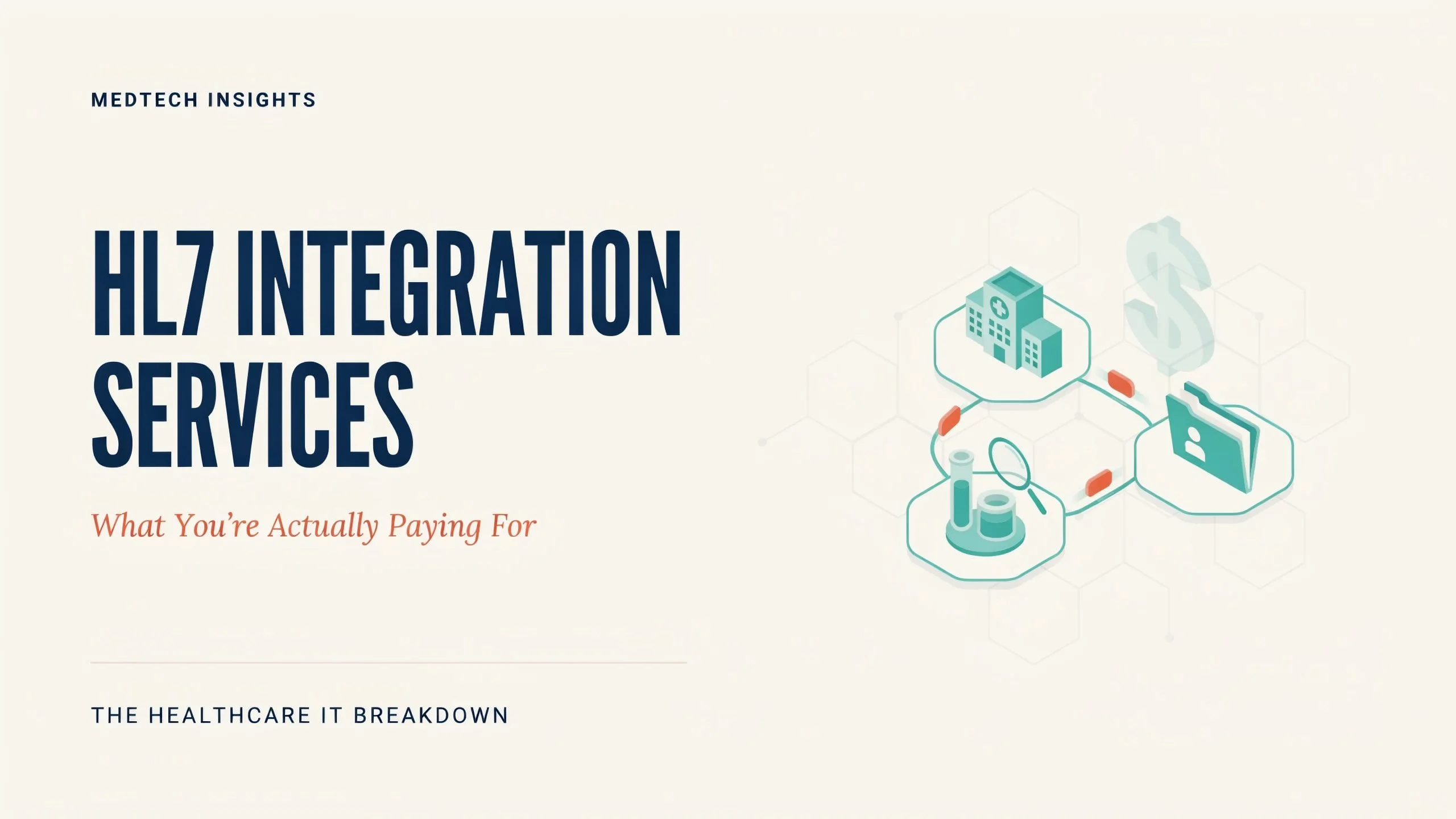
HL7 Integration Services: What You're Actually Paying For
A CTO told us his platform was FHIR-native, so HL7 wasn't his problem. Two weeks later the hospital sent over a spec for an ADT feed over MLLP. Here's what HL7 integration work actually involves, and what makes one interface cost three times another.
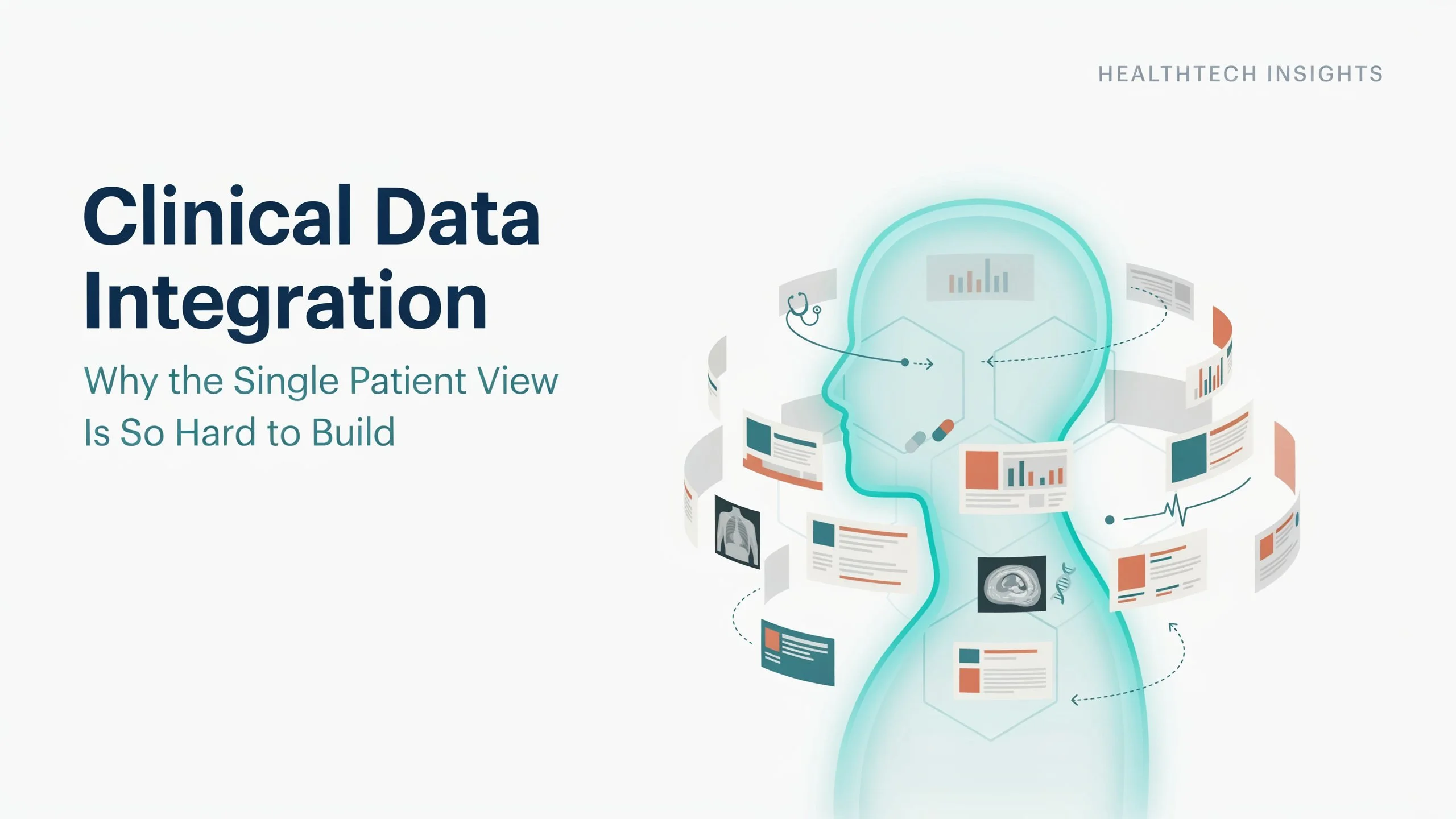
Clinical Data Integration: Why the Single Patient View Is So Hard to Build
A team demoed a beautiful unified patient dashboard. A nurse in the room asked one question: is this medication list current? Nobody could answer it. That question is the whole problem with clinical data integration.
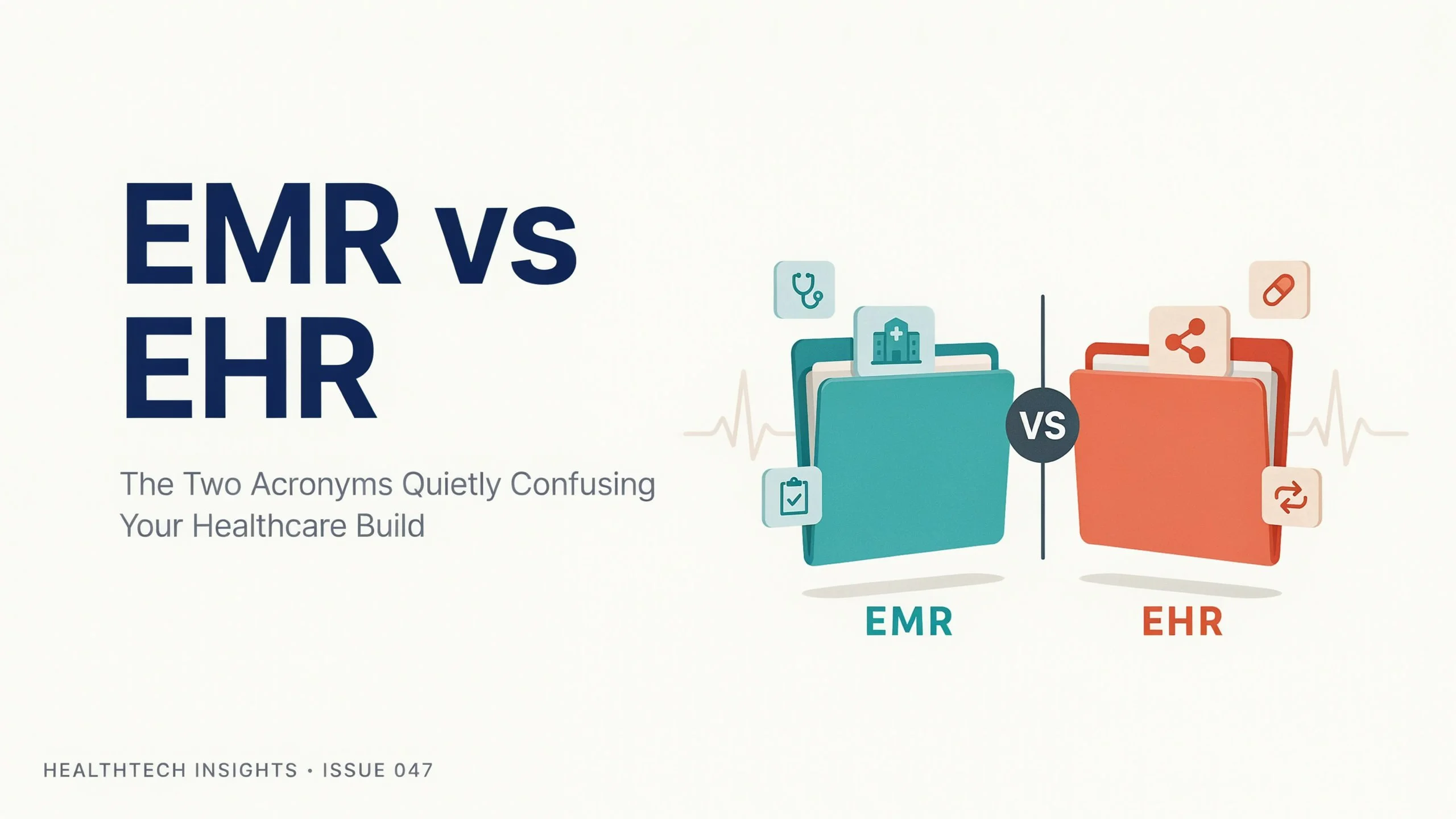
EMR vs EHR: The Two Acronyms Quietly Confusing Your Healthcare Build
A founder once lowered his voice on a call and asked, like he was confessing something: "What's actually the difference between an EMR and an EHR?" Six months into building a healthtech product. Here's the answer, and why it changes your build.