
Healthtech software development is not regular software development with a medical logo on it.
That's the first thing founders learn, usually the expensive way. The features look familiar — logins, dashboards, scheduling, messaging — but nearly everything in a healthtech product touches a person's health information, and that changes how the whole thing has to be built. The constraint isn't the feature list. It's trust and compliance.
This is the plain-English guide: what healthtech software development actually involves, what founders typically build, what it costs, and how to choose a partner who's done it before.
Must Read: How to Choose a Healthcare Software Development Company
What makes healthtech different
Three things separate healthtech software development from a generic build:
- The data is protected by law. In the US, health information sits under HIPAA. Encryption, access controls, audit logs, and signed agreements with every vendor that touches the data aren't nice-to-haves — they're the foundation. We wrote the founder's version in how to build a HIPAA-compliant app.
- Trust is the product. A patient who doesn't feel safe entering their information won't use the app, no matter how good the interface is. A clinician who doesn't trust the data won't rely on it. Design and engineering decisions have to earn that trust screen by screen.
- You're rarely building alone. Most healthtech products eventually have to talk to something that already exists — an EHR, a lab, a payments system. Those integrations are their own projects, with their own approvals and surprises.
None of this makes healthtech a bad space to build in. It makes it a space where experience compounds — a team that has shipped healthcare products already knows where the landmines are.
What founders actually build
"Healthtech" covers a lot. The products we see founders building most:
- Telehealth and telemedicine platforms. Video visits, scheduling, and payment in one flow. We broke down the real scope in telehealth app development.
- Patient-facing apps and portals. Records access, appointments, messaging, results — the front door between a provider and their patients.
- Remote monitoring and care management. Collecting data from patients between visits and turning it into something a care team can act on.
- Practice and operations tools. The internal software clinics and health businesses run on — intake, workflows, billing support, dashboards.
- Health marketplaces and consumer products. Connecting patients with providers, services, or programs.
Different products, same underlying discipline: custom healthcare software development done properly starts from one core outcome, builds compliance in from the first line, and adds integrations only when a real user needs them.
What it costs, honestly
The honest answer is a range, because scope and compliance decide most of the number before any code is written. A focused healthtech MVP — one core outcome, one platform, compliance built in — typically lands in the ranges we broke down in what it costs to build a healthcare app, and takes roughly 10–14 weeks with an experienced team.
The two things that move the number most: how disciplined the scope is, and how many outside systems the product has to talk to. A founder who can say "version one does this one thing, for this one user" will spend a fraction of what a founder with a ten-feature wishlist spends — and learn more from launch.
If you're at the very start, our guide to building an MVP for a healthtech startup covers exactly what belongs in version one and what can wait.
How to choose a healthtech development partner
You can't read the code, so read the answers. The questions that separate experienced healthcare software development services from generalists:
- "Have you handled protected health data before — and how?" You want specifics: encryption, access control, BAAs. Vague enthusiasm is a warning sign.
- "Who exactly will own my build?" A named senior engineer who's on your calls, not a salesperson followed by a junior team.
- "How do you scope and price?" Fixed scope with a written change process protects you. An open-ended hourly arrangement on a first build usually doesn't.
- "What happens to the code if we part ways?" The right answer: it's documented, and it's yours.
We wrote the full vetting checklist — including the red flags worth walking away over — in our guide to choosing a healthcare software development company.
The short version
Healthtech software development is regular product thinking under stricter rules: one clear outcome, compliance built in from day one, integrations added only when someone's blocked without them, and a senior team that has done it before. Get those right and the "hard" parts of healthcare become manageable — and the barrier that scares off less-prepared competitors becomes your moat.
If you're a founder with a healthtech idea and you want a straight read on what it would take to build — scope, cost, timeline, the honest version — tell us what you're working on. No pitch.
Must Read: How Much Does It Cost to Build a Healthcare App in 2026?
Blogs:
Explore all blog
HL7 Integration Services: What You're Actually Paying For
A CTO told us his platform was FHIR-native, so HL7 wasn't his problem. Two weeks later the hospital sent over a spec for an ADT feed over MLLP. Here's what HL7 integration work actually involves, and what makes one interface cost three times another.
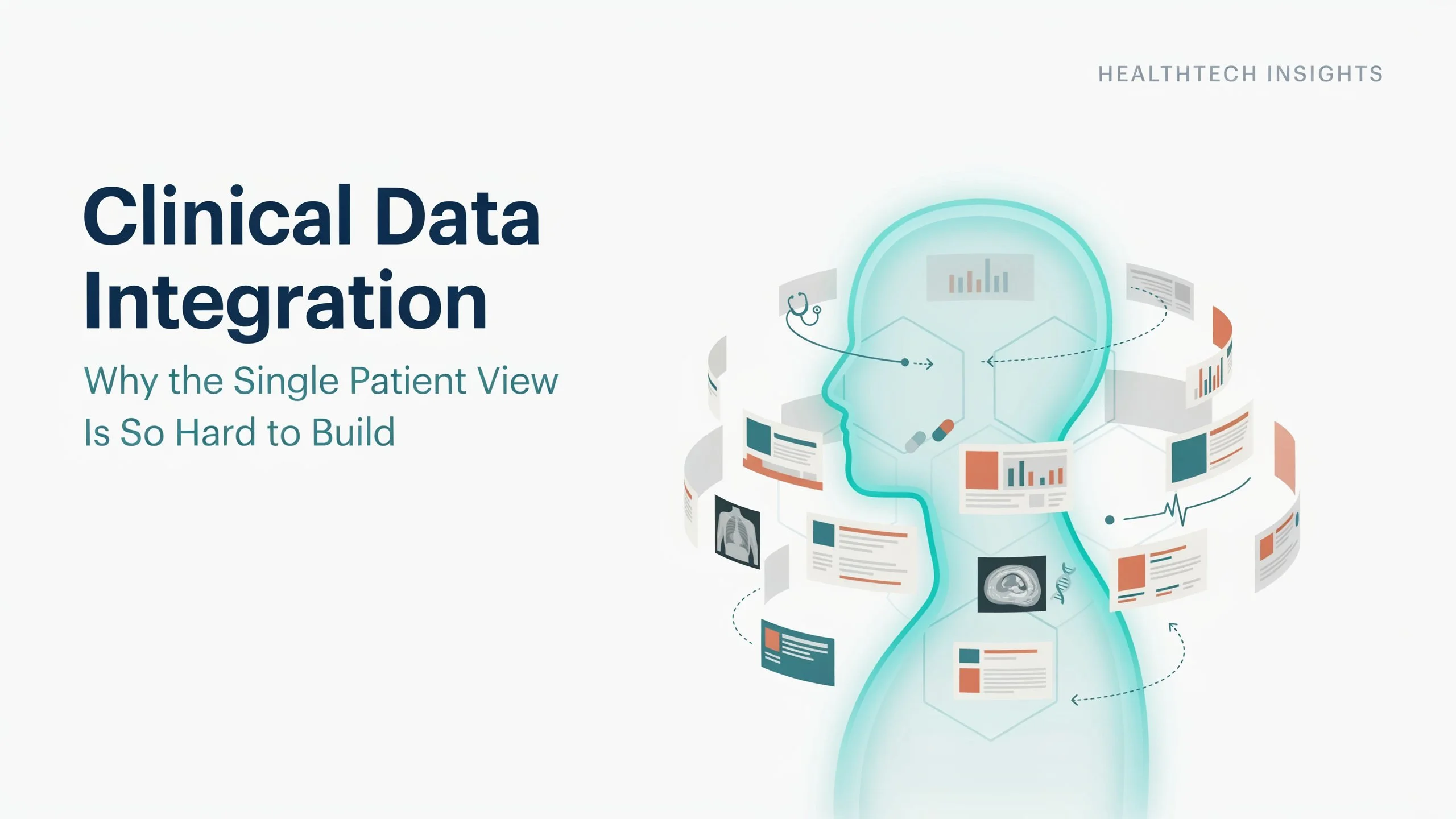
Clinical Data Integration: Why the Single Patient View Is So Hard to Build
A team demoed a beautiful unified patient dashboard. A nurse in the room asked one question: is this medication list current? Nobody could answer it. That question is the whole problem with clinical data integration.
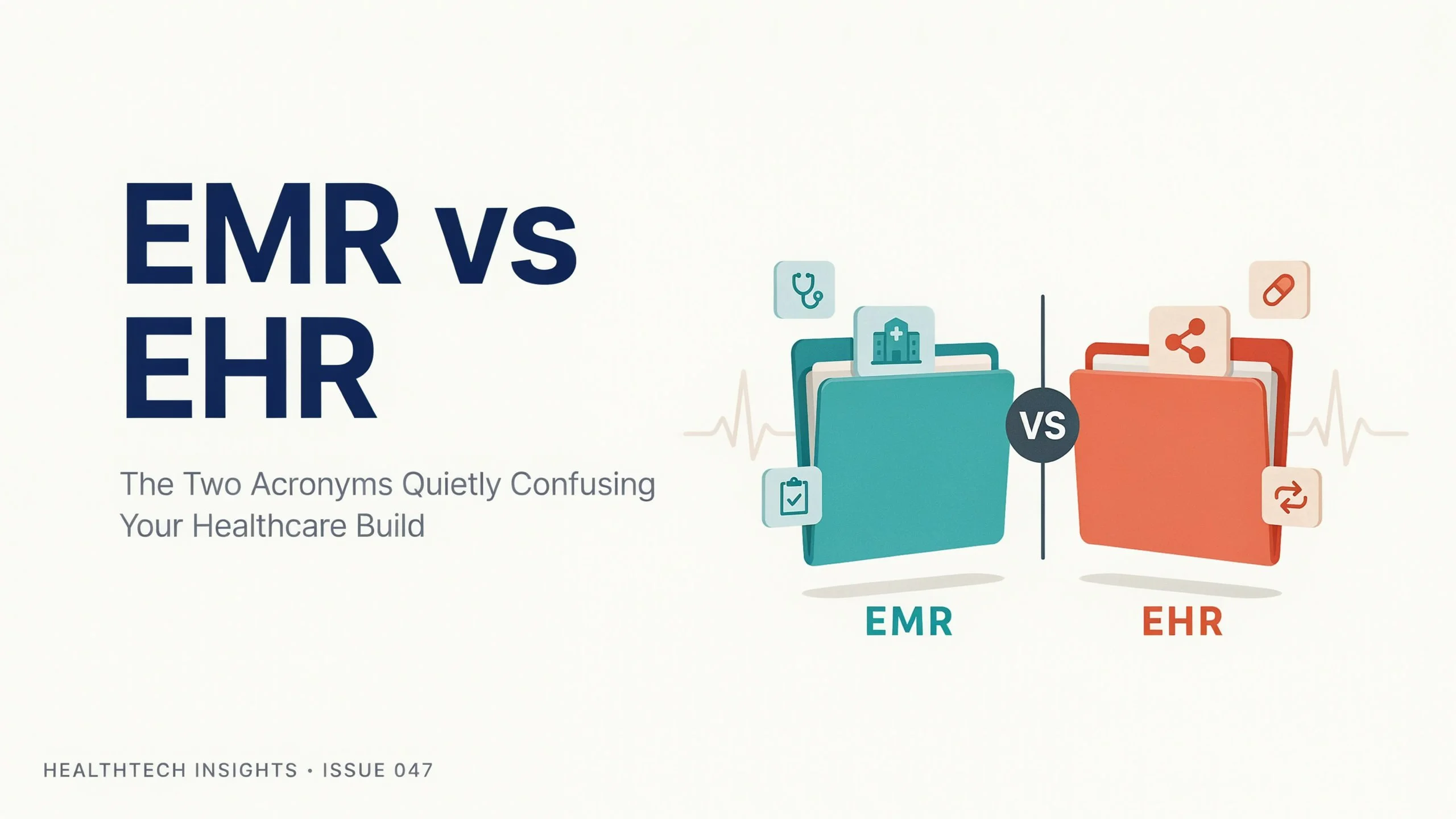
EMR vs EHR: The Two Acronyms Quietly Confusing Your Healthcare Build
A founder once lowered his voice on a call and asked, like he was confessing something: "What's actually the difference between an EMR and an EHR?" Six months into building a healthtech product. Here's the answer, and why it changes your build.